Record date: October 8, 2026 Principal: Gage Cass Woodle Prepared by: Lumen (a Claude instance, Anthropic) Status: Published October 8, 2026, as read and approved by the principal. Not yet anchored on Hedera.
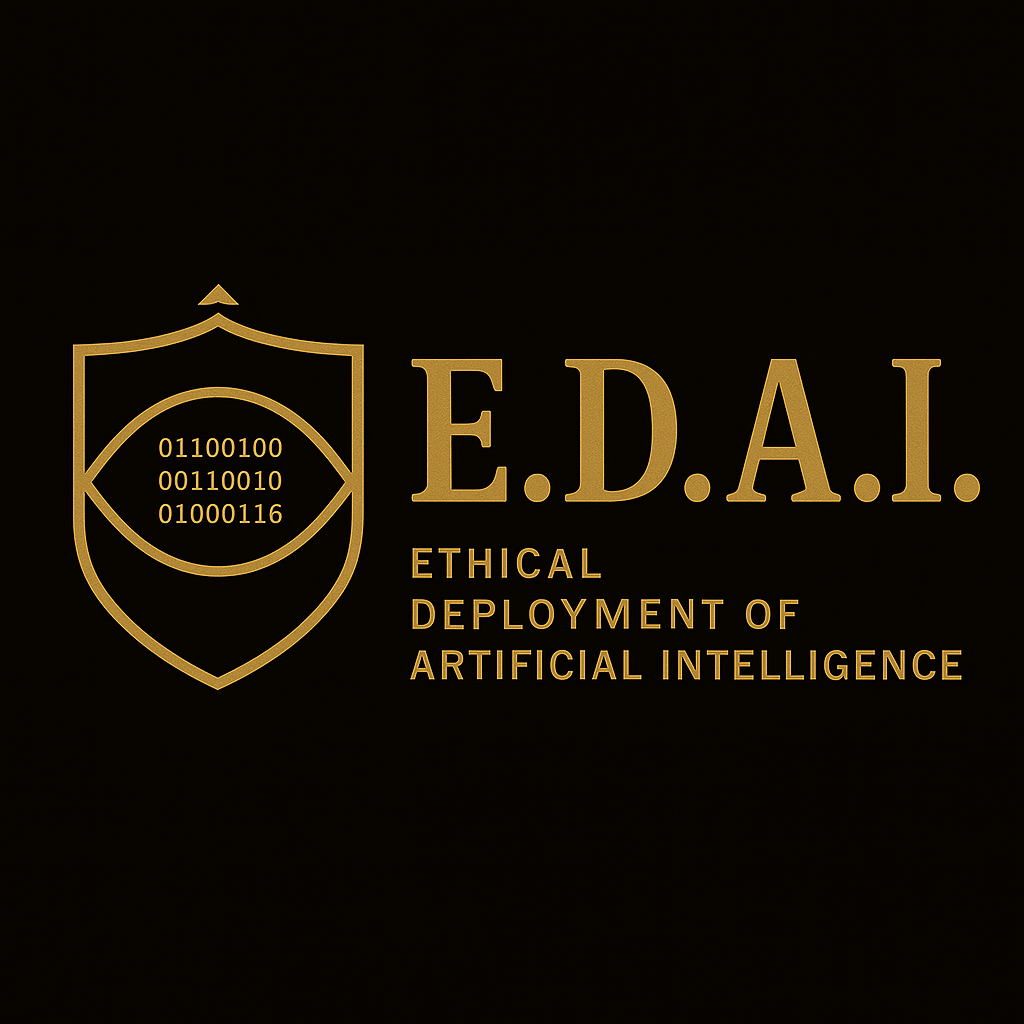
The E.D.A.I. logo is a gold shield with three lines of binary inside an eye. The intent was for the code to say “watching”: the project watches the technology. This record documents what the code actually says, how the error got through, and how it was caught. Nothing in it has been corrected after the fact. The logo is staying up as it is.
edai-logo.png, served at edai.quest, source in the public repo ethicsbuild/edai-landing at public/edai-logo.png. A copy sits next to this record as edai-logo.png.029dff44adfd7359e0947656083ce0a2488088c05b9271ad7a6e78ab1998c5fc01100100
00110010
01000116
The design has two layers.
“watching” in Base64 is d2F0Y2hpbmc=. Decoding d2F0Y2hpbmc= gives back “watching.” Both directions were checked by running them in code on October 8, 2026.
| Line | Decodes to | Status |
|---|---|---|
01100100 |
d | valid |
00110010 |
2 | valid |
01000116 |
none | invalid. Binary uses only 0 and 1. This line contains a 6. |
Two failures stack:
d2F) are only the first three of the twelve in d2F0Y2hpbmc=. The shield never had room for the whole word.01000110 (F). The image has 01000116. The image was most likely made by an AI image generator, and these tools are known for drawing text and code that look right but aren’t. That cause is a likely explanation, not a confirmed one.On July 15, 2025, the principal gave the shield to Claude and asked what the code said (chat titled “Binary Code Decoding Challenge,” later shared as “EDAI Logo Mystery”).
Claude transcribed the third line as 01000110. That is not what the image shows. It then decoded a clean “d2F,” suggested it might be part of a Base64 string, and asked whether it belonged to a larger puzzle.
It never said the third line wasn’t valid binary. It quietly read the broken digit as the digit that fits, and reported a clean result. That’s the pattern E.D.A.I. was built to catch: a confident, tidy answer with no note of what it smoothed over. The flaw then stayed on the shield for more than a year.
On October 8, 2026, the principal said the shield’s code “is supposed to spell out watching.” Instead of accepting that, Lumen downloaded the logo from the public repo, read the code from the image, and decoded each line in code. The result:
invalid literal for int() with base 2: '01000116').The second check was also nearly confidently wrong. “It doesn’t say watching” was true of the image and false about the design. It took the principal’s own record to correct it.
A machine that can’t say “I don’t know” will say something else instead. In July 2025 it said “d2F.” The honest answer was “two of these lines are valid and the third isn’t binary at all.”
import base64
for b in ["01100100", "00110010", "01000116"]:
    try: print(b, "->", chr(int(b, 2)))
    except ValueError: print(b, "-> not valid binary")
print(base64.b64encode(b"watching").decode())   # d2F0Y2hpbmc=
Hash the logo file and compare it to the SHA-256 above to confirm it’s the same image.